
Loading…
Loading…
Loading…
Loading blog…
Blog
By Ramana Machines · September 24, 2026
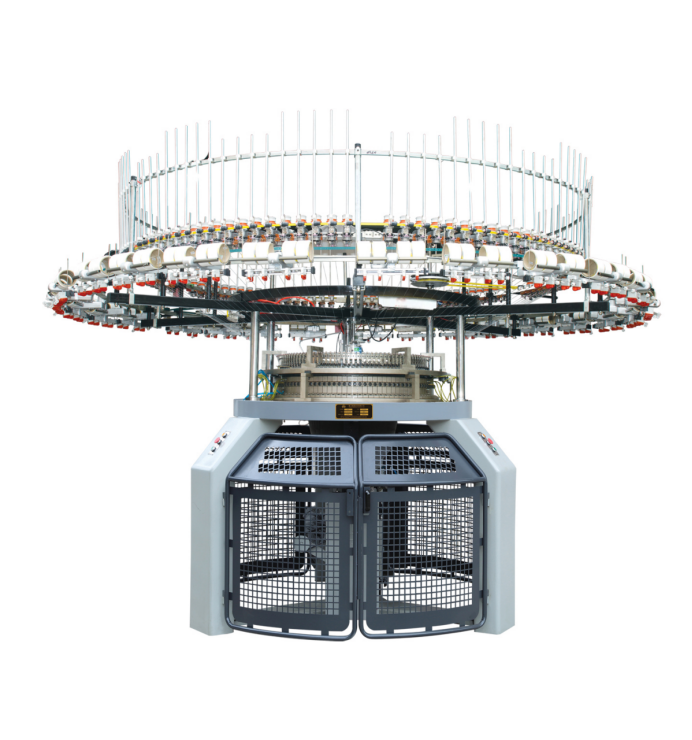
Learn how to find and fix vertical lines in knitted fabric caused by damaged needles, needle alignment, cylinder issues, sinker problems, cam wear, and yarn tension.
Vertical lines are a common fabric problem in circular knitting. They appear as lines running from the top to the bottom of the knitted fabric.
Sometimes the line is light and easy to miss. In other cases, it can be clearly seen and may make the fabric unsuitable for the final product.
A vertical line is often linked to one knitting position. The cause may be a damaged needle, poor needle alignment, a cylinder problem, a sinker issue, worn cams, or uneven yarn tension.
Finding the exact knitting position can make troubleshooting much easier.
A circular knitting machine has many needles working together to form the fabric. If one needle or another part at one position does not work correctly, it can create a repeated line in the fabric.
The first step is to identify whether the line appears at the same position throughout the fabric.
If it does, the machine position linked to that line should be checked carefully.
A damaged needle is one of the first things to check when a vertical line appears.
A needle may become:
A damaged needle may not form the stitch in the same way as the other needles. This can create a visible line.
Stop the machine safely and check the needle linked to the defective area.
Replace the damaged needle with the correct needle. Then run a small amount of fabric and check whether the line has disappeared.
If the same problem returns, inspect the nearby parts as well.
Needles need to move correctly in their positions.
If a needle is not sitting or moving correctly, it may form stitches differently from the needles around it.
Poor needle alignment can be caused by:
Check the needle carefully and compare its movement with nearby needles.
Make sure it moves freely and follows the same path as the other needles.
If several needles in the same area show a problem, the issue may be related to the needle area rather than one needle alone.
The cylinder holds the needles and plays an important role in the knitting process.
If there is damage, dirt, wear, or another problem around the cylinder, needle movement may not remain consistent.
This can lead to a repeated vertical line.
Look for:
Clean the area according to the machine manufacturer's instructions.
If there is visible damage or the needle movement is not normal, the machine should be checked by a trained technician.
Do not try to make major cylinder adjustments without proper knowledge.
Sinkers work together with needles during the knitting process. A damaged or worn sinker can affect how the stitch is formed.
A sinker problem may create a vertical line that continues through the fabric.
Check the sinker near the position where the vertical line appears.
Compare its condition and movement with the nearby sinkers.
If it is damaged or badly worn, replace it with the correct part and test the machine again.
Cams control the movement of needles during knitting.
Over time, cams can become worn. A worn cam may cause a needle to move differently from the other needles.
This can lead to repeated fabric lines or other stitch problems.
Inspect the cam area for:
If the cam is worn or damaged, it may need to be replaced.
If you are not trained to work on the cam system, get technical support instead of making major adjustments yourself.
Yarn tension can also affect the appearance of knitted fabric.
If one yarn path has different tension from the others, it can create a visible change in the stitches.
This may appear as a vertical line.
Check the yarn path from the yarn package to the knitting area.
Make sure:
Make small tension changes and test the fabric after each change.
Finding the exact machine position is one of the most useful steps when dealing with vertical lines.
Stop the machine safely and inspect the fabric.
Mark the vertical line on the fabric so you can track its position.
Look at the point where the line was formed and identify the machine position that matches it.
Inspect the needle at that position.
Look for bending, wear, hook damage, or poor movement.
Inspect the sinker working near that needle.
Look at the related cam area for dirt, wear, or damage.
Make sure the yarn feeding the affected position is moving correctly.
After making the required correction, produce a small amount of fabric and check the same position again.
If the vertical line disappears, the cause may have been found.
If the line remains after checking the needle, sinker, yarn, and basic settings, the problem may require a more detailed machine check.
Do not keep changing different settings without finding the cause.
Repeated changes can make troubleshooting more difficult.
A trained technician can check the cylinder, cam system, needle movement, and other machine parts when the problem is not clear.
Regular care can help reduce fabric problems.
Inspect needles for wear and damage.
Replace damaged or worn sinkers when needed.
Remove dust, lint, and yarn waste from the working areas according to the machine instructions.
Make sure yarn tension remains suitable and stable.
Check cams for wear and damage during regular maintenance.
Use settings suitable for the yarn, fabric, gauge, and production requirement.
Record repeated fabric problems, replaced parts, and maintenance work. This can help identify problems that return over time.
Machine speed may not directly create a vertical line, but an unsuitable speed can make an existing problem more noticeable.
If a vertical line appears after increasing production speed, reduce the speed and check the needle, yarn feeding, tension, and related machine parts.
The machine should always be operated at a speed suitable for its condition, yarn, fabric, and production requirements.
Fabric quality also depends on choosing equipment that matches the production requirement.
An automatic circular knitting machine can provide automated control and consistent production, but the machine still needs correct setup, suitable yarn, regular maintenance, and trained operators.
When choosing equipment, consider the machine gauge, fabric type, yarn, production volume, automation, spare parts availability, and technical support.
A reliable textile machinery supplier can also help you understand machine specifications and select equipment according to your production needs.
Technical support should be considered when:
Repeated fabric defects can increase fabric waste, so finding the cause early can help reduce production loss.
Ramana Machines supports textile businesses with circular knitting machinery sourcing, machine selection, installation assistance, operator training, spare parts, and after-sales technical support.
We help customers select suitable machinery according to fabric type, yarn, gauge, production requirements, and machine configuration. We also support China sourcing and imported textile machinery requirements.
If you are facing repeated vertical lines or other circular knitting problems, Ramana Machines can assist with suitable machinery, spare parts, and technical support based on your production needs.
Related
16 Oct 2026
16 Oct 2026
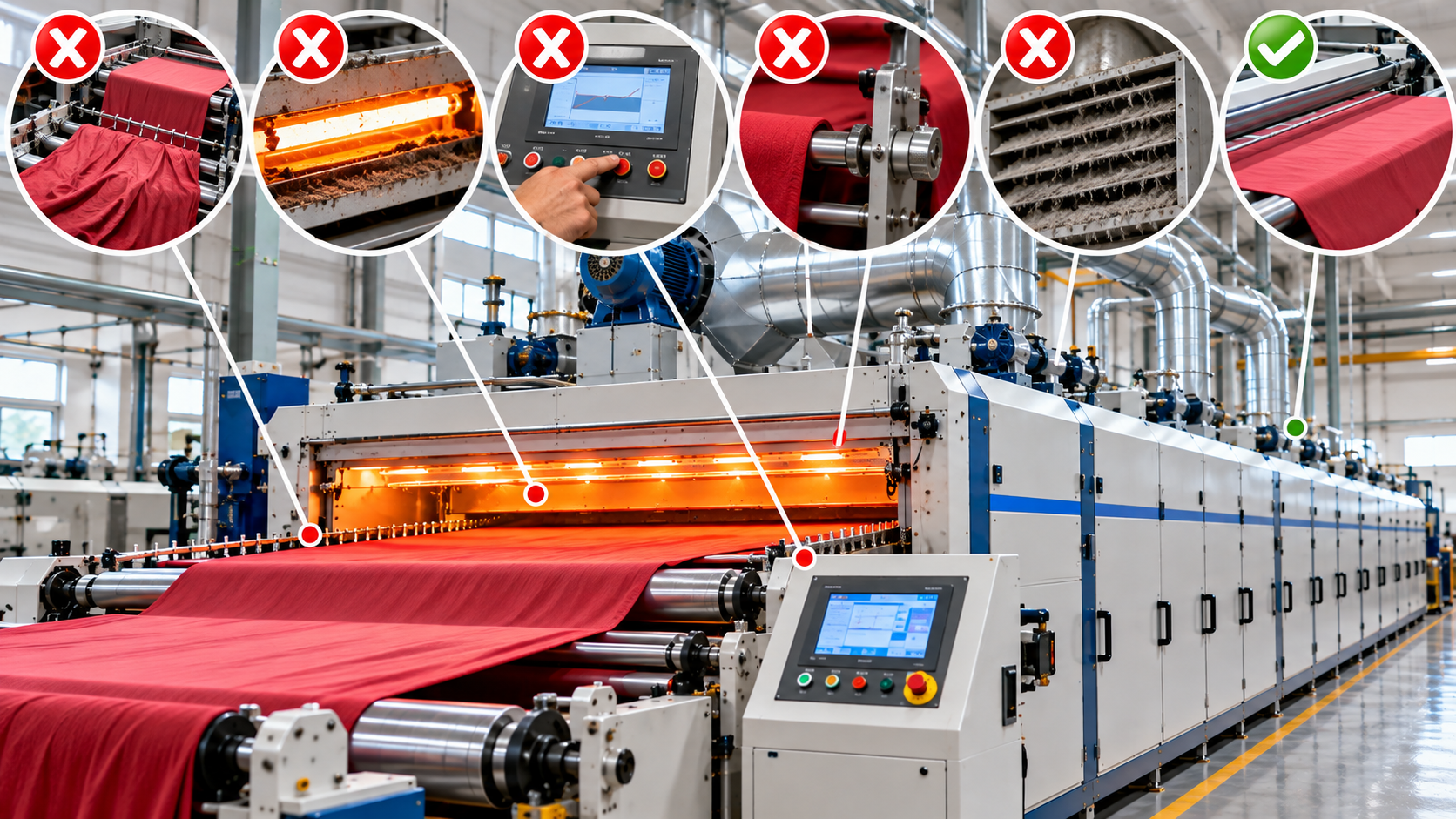
Incorrect temperature, fabric tension, overfeed, and airflow settings can affect stenter machine performance and fabric quality. Learn the common operating mistakes to avoid and how regular maintenance and correct settings can improve textile finishing results.
View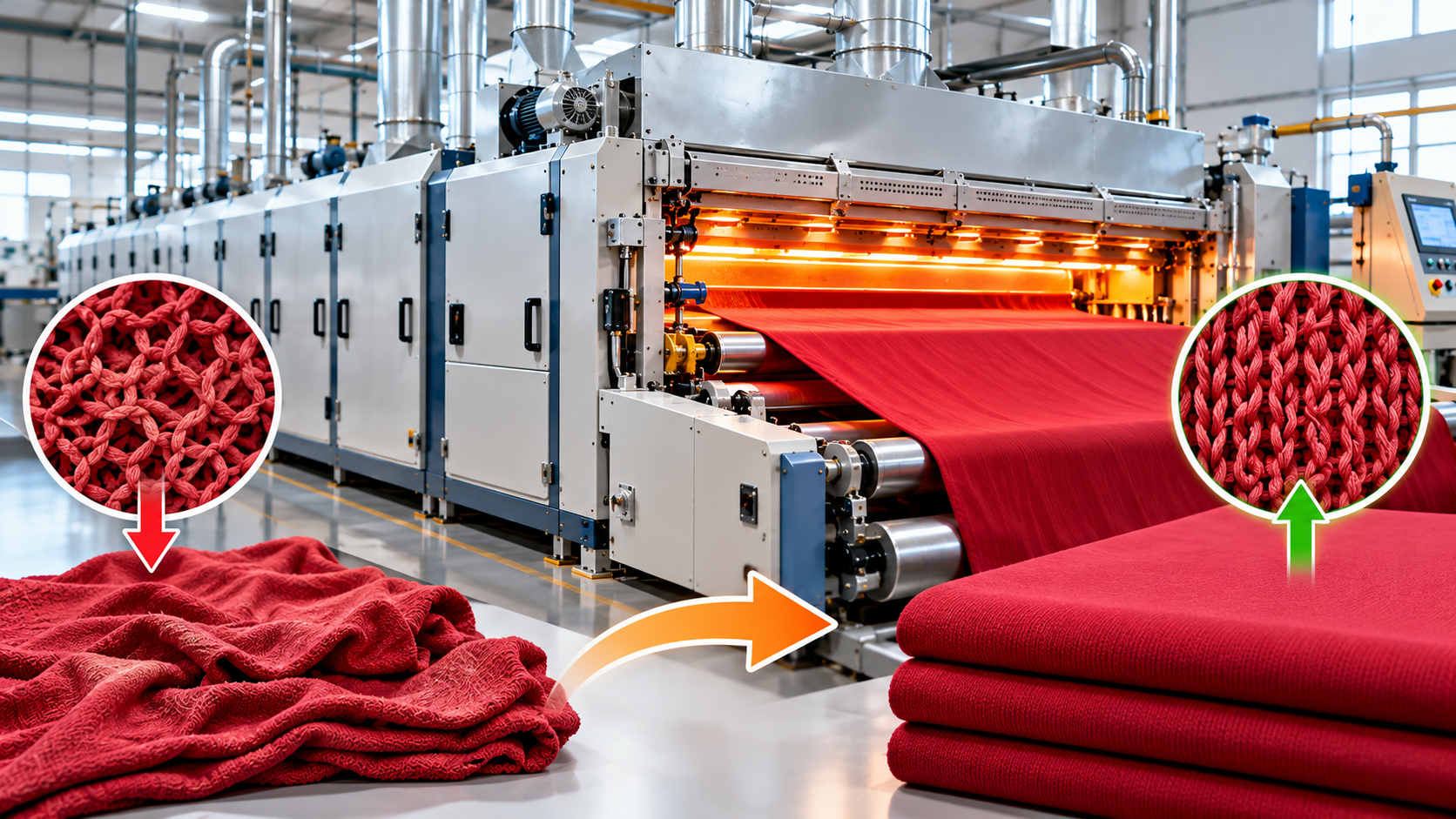
16 Oct 2026
16 Oct 2026
A stenter machine helps textile manufacturers control fabric width, manage tension, and apply controlled heat during finishing. Learn how temperature, overfeed, airflow, and proper machine settings support dimensional stability and help reduce unwanted shrinkage.
View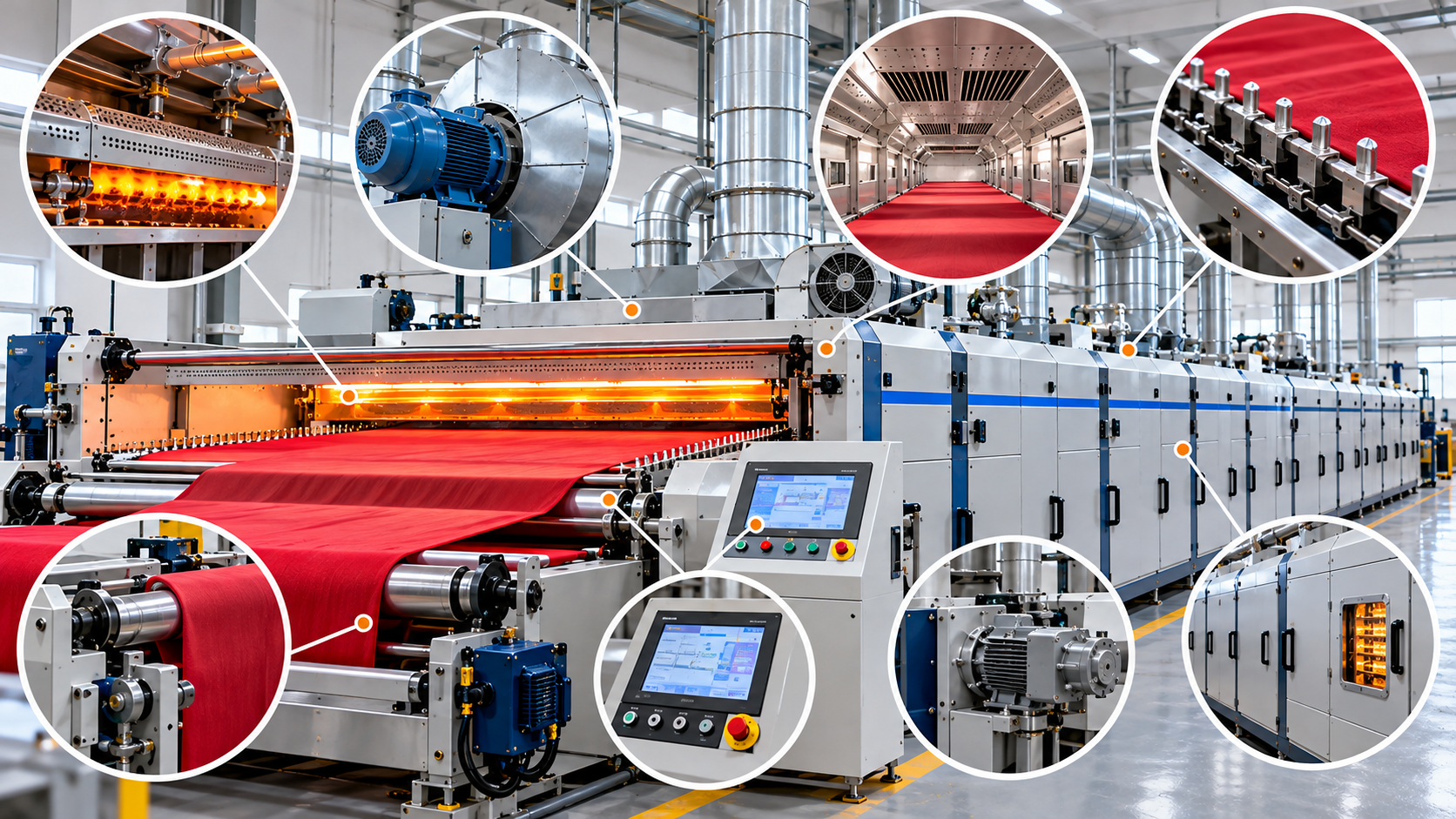
16 Oct 2026
16 Oct 2026
Planning to buy a stenter machine? Learn how to compare working width, temperature control, heating systems, production speed, airflow, energy consumption, safety features, and maintenance support to find the right machine for your textile production needs.
ViewFind answers to the most common questions about our machines, services and support.
Vertical lines can be caused by damaged needles, poor needle alignment, cylinder problems, sinker issues, worn cams, uneven yarn tension, or problems at one knitting position.
Yes. A damaged or worn needle may form stitches differently from nearby needles, which can create a repeated line in the fabric.
Mark the line on the fabric and follow its position back to the knitting area. The needle at the matching position should be inspected first.
Yes. A damaged, worn, or incorrectly moving sinker can affect stitch formation and may create a repeated line.
Yes. Worn cams can affect needle movement and may cause repeated stitch problems at the related knitting position.
Yes. Uneven yarn tension can make stitches look different in one area and may result in a visible vertical line.
Yes. Dirt, wear, damage, or other cylinder problems can affect needle movement and create repeated fabric defects.
Inspect needles and sinkers regularly, keep the machine clean, check yarn tension, inspect cams, use suitable settings, and follow the recommended maintenance schedule.
If the needle is damaged or worn, it should normally be replaced with the correct needle. However, also check the sinker, cam, yarn path, and nearby parts if the problem continues.
Contact a technician when the line continues after basic checks, the cylinder or cams appear damaged, several parts are affected, or the machine has unusual movement or noise.