Blog
New vs Used Textile Dyeing Machines: Which Should You Choose?
By Ramana Machines · October 14, 2026
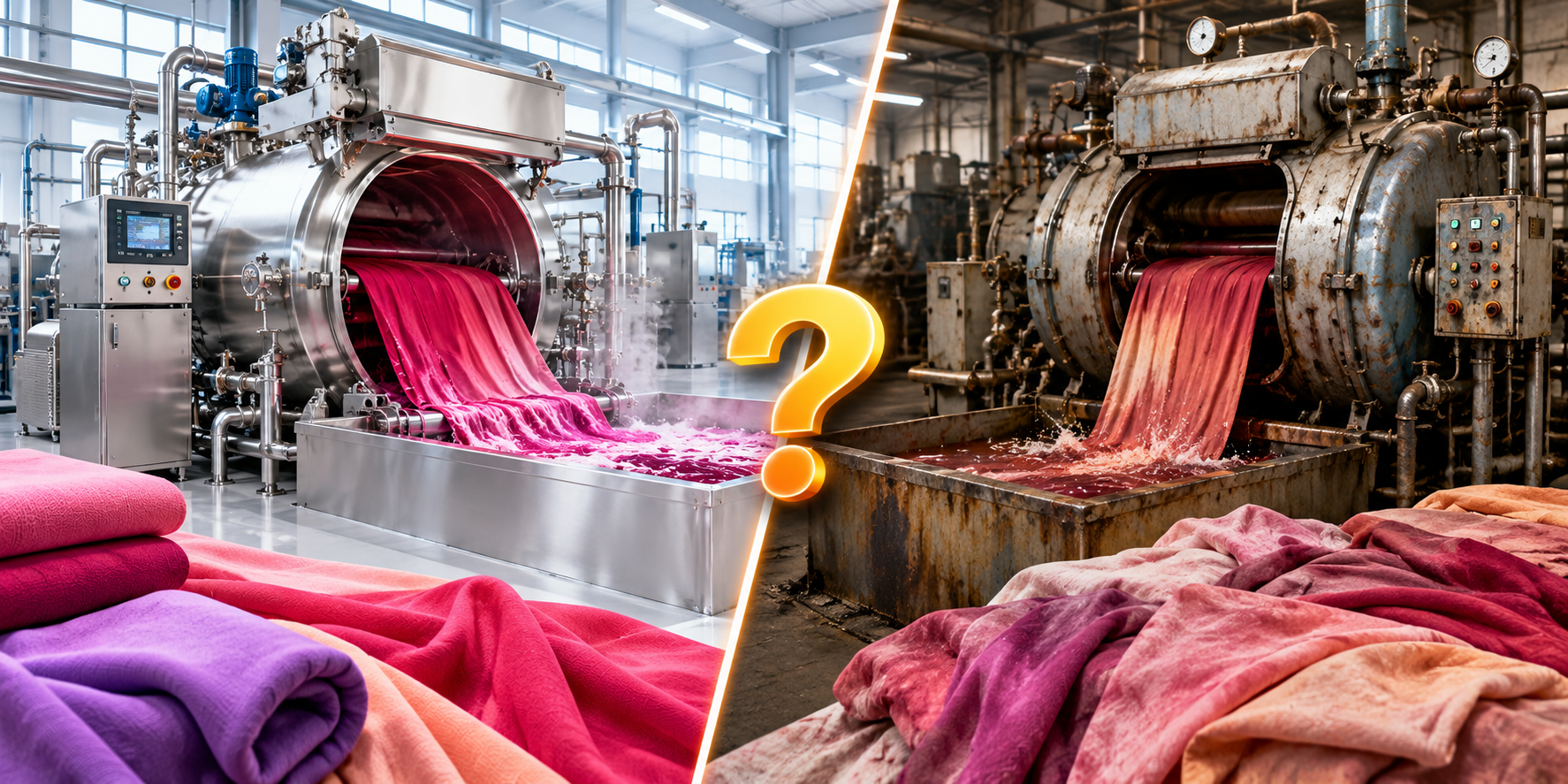
Should you invest in a new or used textile dyeing machine? Compare purchase costs, energy consumption, maintenance, automation, and technical support to understand which option suits your production needs and budget. Use this practical guide to make a more informed machinery investment.
Choosing between a new and a used textile dyeing machine is an important decision for textile manufacturers. The right choice depends on your production requirements, budget, fabric type, maintenance expectations, and long-term business plans.
A new machine may offer updated features, better automation, and manufacturer support. On the other hand, a used machine can help reduce the initial investment if it is in good working condition.
Before investing in textile machinery, it is important to compare both options carefully. This guide explains the differences between new and used textile dyeing machines and helps you decide which option is suitable for your business.
What Is a New Textile Dyeing Machine?
A new textile dyeing machine is equipment purchased directly from a manufacturer or an authorised supplier. It has not been used for commercial production and is generally supplied according to the agreed specifications.
New machines may offer modern control systems, improved process monitoring, and automation features, depending on the model.
Advantages of a new dyeing machine
- Latest features: Some models offer advanced controls, automated temperature regulation, and programmable dyeing cycles.
- Lower initial maintenance needs: New equipment generally has less wear on its components.
- Warranty options: The supplier may provide a warranty according to the purchase agreement.
- Production planning: You can select a machine that matches your fabric type, batch size, and production targets.
- Technical support: Installation, operator training, and after-sales service may be available, depending on the supplier.
Possible disadvantages
- Higher initial purchase cost.
- Additional expenses for installation, utilities, and operator training.
- Delivery and commissioning may require time, depending on availability and customisation.
What Is a Used Textile Dyeing Machine?
A used textile dyeing machine is equipment that has previously been operated in a production facility. It may be available because a factory is upgrading its equipment, changing production requirements, or closing operations.
Used machines can be a practical option for businesses that want to reduce their initial investment. However, their actual value depends on their condition, age, maintenance history, and compatibility with your production process.
Advantages of a used dyeing machine
- Lower purchase price: Used equipment generally costs less than a comparable new machine.
- Potentially quicker availability: A machine already in stock may be available sooner than a newly manufactured model.
- Suitable for smaller budgets: It can help businesses enter textile dyeing or expand capacity with less initial spending.
- Existing operating history: Maintenance records and production history may help you assess its performance.
Possible disadvantages
- Worn pumps, valves, seals, motors, or other components may require replacement.
- Older controls may offer limited automation or monitoring.
- Spare parts may be difficult to source for discontinued models.
- Warranty and technical support may be limited or unavailable.
- Unexpected repairs and downtime can increase the total cost of ownership.
New vs Used Textile Dyeing Machines: Comparison Chart
The following chart highlights the main differences to consider before purchasing.
Comparison factor | New machine | Used machine |
| Purchase cost | Usually higher | Usually lower |
| Machine condition | New, unused equipment | Depends on age and maintenance |
| Technology | May include newer features | Depends on model and year |
| Maintenance | Usually lower at the beginning | May require additional repairs |
| Warranty | May be available | Often limited; verify terms |
| Spare parts | Depends on model and supplier | Availability must be checked |
| Customisation | May offer configuration options | Usually limited to existing specifications |
| Delivery time | Depends on manufacturing and stock | Depends on availability and inspection |
| Production reliability | Depends on design and installation | Depends on condition and servicing |
| Best suited for | Long-term investment and specific requirements | Budget-conscious purchases after inspection |
Note: These are general comparisons. Actual costs, features, warranties, and machine performance vary by model and supplier.
Important Factors to Consider Before Buying
1. Set Your Budget
Do not compare machines only by their purchase prices. Calculate the complete investment, including transportation, installation, commissioning, utilities, spare parts, and operator training.
For a used machine, also estimate the cost of repairs and any upgrades needed before production.
2. Check Your Production Requirements
Consider the type of fabric you process, the required batch size, daily output, and the variety of colours you produce.
A machine that is too small may limit production, while an oversized machine may increase operating costs. Select equipment that matches your current needs and expected business growth.
3. Inspect the Machine's Condition
If you are considering used equipment, inspect the machine before finalising the purchase.
Check the following:
- Pump performance and dye liquor circulation.
- Heating system and temperature controls.
- Valves, seals, pipelines, and filters.
- Electrical panels, sensors, and control systems.
- Signs of corrosion, leakage, or unusual vibration.
- Availability of essential spare parts.
Whenever possible, request a trial run and review maintenance records. A qualified technician should inspect the equipment before you make a final decision.
4. Compare Energy and Water Consumption
Dyeing can require significant amounts of water, heat, and electricity. Differences in machine design and operating efficiency may affect the cost of every production batch.
Ask suppliers for relevant consumption data under comparable operating conditions. Consider water usage, heating requirements, liquor ratio, cycle time, and wastewater handling.
A lower purchase price may not represent the best value if the machine has high running costs.
5. Check Spare Parts and Technical Support
Machine breakdowns can interrupt production and delay customer orders. Before buying, confirm whether essential parts are available and whether qualified technicians can provide maintenance support.
For older machines, check the availability of compatible replacement components and the cost of servicing discontinued control systems.
6. Consider Automation and Process Control
Modern dyeing equipment may offer programmable recipes, automatic temperature control, and improved process monitoring. These features can help operators repeat dyeing processes more consistently when correctly configured.
A used machine may also have useful automation, so assess its actual features instead of assuming that every new machine is better than every used model.
Which Is the Best Dyeing Machine for Your Business?
The best dyeing machine is not necessarily the newest or the cheapest option. It is the machine that meets your production requirements, fits your budget, and offers reliable performance over its expected working life.
Choose a new machine if:
- You are establishing a new production unit with long-term plans.
- You need specific capacity, automation, or process-control features.
- You want a new-machine warranty where available.
- You prefer to minimise the risk associated with previous wear and unknown maintenance history.
Choose a used machine if:
- Your initial budget is limited.
- You need additional capacity for an existing production unit.
- You have access to a reliable used machine with documented maintenance records.
- You can arrange a proper inspection and budget for potential repairs.
For either option, compare at least two or three machines with similar capacity and specifications. This makes it easier to assess value instead of relying only on the advertised price.
How to Calculate the Total Cost of Ownership
Before making your decision, estimate the cost of operating the machine over several years.
Total cost of ownership = Purchase price + Installation + Operating costs + Maintenance and repairs − Resale value
For a used machine, include inspection charges, transportation, refurbishment, and any required upgrades. For a new machine, include installation, training, and other initial expenses.
Compare machines over the same period and production volume. This gives you a more useful picture of the investment than the purchase price alone.
Final Buying Checklist
Before confirming your order, make sure you have checked:
- Required fabric types and dyeing capacity.
- Machine specifications and operating conditions.
- Water, electricity, and heating requirements.
- Installation and commissioning costs.
- Warranty terms and after-sales support.
- Spare parts availability and maintenance costs.
- Safety features and applicable compliance requirements.
- Supplier experience and machine documentation.
Explore Textile Machinery with Ramana Machines
Choosing the right equipment can help textile manufacturers manage production costs, improve process consistency, and plan for future growth. Before investing, compare machine specifications, expected operating expenses, service availability, and long-term maintenance requirements.
Ramana Machines supplies textile machinery for businesses looking for equipment suited to their production needs. If you are planning to purchase or upgrade a textile processing setup, visit Ramana Machines to explore available machinery and discuss your requirements with the team.