Blog
Dropped Stitches in Circular Knitting Machines: Causes, Problems and Solutions
By Ramana Machines · September 24, 2026
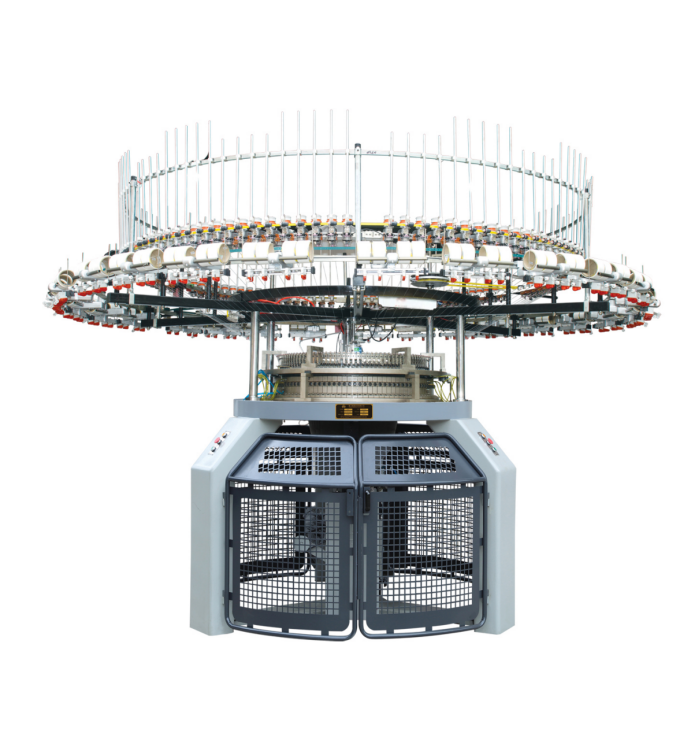
Learn why dropped stitches occur in circular knitting machines and how to check needles, latches, yarn tension, feeding, sinkers, cams, and machine settings.
Dropped Stitches in Circular Knitting Machines: Causes, Problems and Solutions
Dropped stitches are a common fabric problem in circular knitting production. They appear when a stitch does not form correctly or when a formed loop slips from the needle. This can create holes, uneven areas, vertical defects, or weak points in the knitted fabric.
The cause may be related to needles, yarn tension, yarn feeding, sinkers, cams, or machine settings. Finding the actual cause is important before making adjustments.
What Are Dropped Stitches?
A dropped stitch occurs when a needle fails to hold or form the yarn loop correctly during the knitting process. Instead of producing a continuous knitted structure, the loop may fall away from the needle.
If the problem continues at the same knitting position, it can create repeated defects in the fabric. Therefore, operators should check both the machine and yarn system when dropped stitches appear.
1. Broken or Damaged Needle
A broken, bent, or damaged needle is one of the first things to check.
A damaged needle may not catch the yarn properly. Its hook may also fail to hold the loop during the knitting cycle.
What to check:
- Broken or bent needles
- Damaged needle hooks
- Needles that do not move smoothly
- Needles sitting incorrectly in the cylinder
- Repeated defects at the same needle position
Replace damaged needles with the correct type and size recommended for the machine.
2. Needle Latch Problems
The needle latch plays an important role in opening and closing the needle hook. If the latch is bent, damaged, stuck, or does not move freely, the yarn may not form the stitch correctly.
Check whether the latch moves smoothly and returns to the correct position. Dirt, lint, oil buildup, or physical damage can affect its movement.
If dropped stitches repeatedly occur at one needle position, inspecting the needle latch can help identify the problem.
3. Incorrect Yarn Tension
Yarn tension has a direct effect on stitch formation. If the tension is too high, the yarn may not feed smoothly to the needles. If it is too loose, the yarn may not form a stable loop.
Check the tension when:
- The fabric has loose or irregular stitches
- Yarn is pulling heavily during knitting
- Stitch size changes during production
- Yarn breakage happens along with dropped stitches
Make small adjustments and test the fabric rather than changing the tension too quickly.
4. Yarn Feeding Problems
The yarn must reach the knitting point smoothly and consistently. Problems with the yarn feeder, yarn path, guide, or yarn package can interrupt the feeding process.
Check for:
- Yarn getting caught in the guide
- Incorrect yarn path
- Uneven yarn supply
- Damaged yarn feeder parts
- Excessive friction
- Poor-quality or inconsistent yarn
Keeping the yarn path clean and correctly positioned can help reduce dropped stitches.
5. Worn Sinkers
Sinkers work together with needles during loop formation and fabric control. Worn or damaged sinkers may affect the correct movement of the yarn and fabric.
Inspect sinkers for wear, damage, or incorrect movement. If a particular knitting position repeatedly creates defects, compare its components with nearby positions.
Replacing worn sinkers when required can help restore proper stitch formation.
6. Cam Adjustment Problems
Cams control the movement of needles and other knitting elements. Incorrect cam adjustment or worn cam surfaces can cause needles to move incorrectly.
This may result in:
- Dropped stitches
- Uneven loops
- Needle damage
- Repeated fabric defects
- Irregular stitch formation
Cam adjustments should be made carefully according to the machine's specifications. Avoid making major adjustments without understanding the machine settings.
7. Incorrect Machine Settings
Incorrect machine settings can also cause dropped stitches. Settings related to stitch length, yarn tension, machine speed, take-down, and knitting conditions can affect fabric formation.
Before changing several settings at once, check the machine's current settings and compare them with the recommended production setup.
A good troubleshooting method is to change one setting at a time and observe the fabric result.
How to Find the Actual Cause
When dropped stitches appear, follow a simple checking order:
- Stop the machine safely.
- Identify where the defect appears.
- Check the needle at that position.
- Inspect the needle latch.
- Check sinkers and their movement.
- Inspect the yarn path and feeder.
- Check yarn tension.
- Inspect the related cam area.
- Review machine settings.
- Run a short test after making the required correction.
This approach can help prevent unnecessary adjustments and make troubleshooting easier.
How to Prevent Dropped Stitches
Regular maintenance can reduce the chance of repeated stitch problems.
Important preventive practices include:
- Inspect needles regularly.
- Replace damaged needles promptly.
- Check needle latches for free movement.
- Keep the knitting area clean.
- Check sinkers for wear.
- Inspect cams during maintenance.
- Maintain suitable yarn tension.
- Keep the yarn path clear.
- Use suitable yarn for the machine and fabric.
- Avoid operating at unsuitable speeds.
- Follow the recommended machine settings.
- Train operators to identify early fabric defects.
Preventive maintenance is especially important for continuous production because a small mechanical problem can affect a large quantity of fabric if it is not detected early.
When Should You Contact a Technical Expert?
If dropped stitches continue after checking needles, yarn, sinkers, and basic settings, the problem may require detailed inspection.
Professional technical support can be useful when:
- The same defect repeatedly occurs at one position.
- Needles continue breaking.
- Cam or cylinder movement appears abnormal.
- Machine settings are difficult to adjust.
- Electrical or control errors occur.
- Fabric defects continue after basic troubleshooting.
For businesses sourcing machinery and spare parts, working with a reliable supplier can also make it easier to obtain suitable replacement components and technical assistance.
Choosing Machinery and Spare Parts Support
Good machine performance depends not only on the machine itself but also on correct installation, maintenance, spare parts, and operator support. When selecting equipment, consider the machine's knitting requirements, automation level, production capacity, available technical support, and replacement-part availability.
Businesses searching for a best textile machinery spare parts supplier company in Ludhiana should also check whether the supplier can provide suitable parts and practical technical assistance for the machinery being used.
For automated production, selecting the best Computerized Circular Knitting Machine should involve more than comparing machine price. Gauge, cylinder size, production requirements, controls, yarn compatibility, maintenance requirements, and after-sales support should also be considered.
Support from Ramana Machines
Ramana Machines supports textile businesses with circular knitting machinery sourcing, machine selection, installation assistance, operator guidance, spare parts, and after-sales technical support. We can help businesses identify suitable machinery and related requirements based on their production needs, with support for imported machinery and China sourcing.
If you are facing repeated dropped stitches or need help with circular knitting machinery and spare parts, Ramana Machines can assist with suitable equipment and technical support.